
CU-Structural Soil® is a patented, engineered soil system developed to provide healthy rooting space for urban trees while simultaneously delivering the structural strength required to support pavements, plazas, and hardscape surfaces. Unlike traditional compacted soils—which restrict root growth and lead to long-term tree decline—CU-Structural Soil® is specifically formulated with a precise blend of stone, clay loam, and hydrogel to create a load-bearing matrix that still allows for uncompacted pathways for root expansion.
This innovative system enables trees to thrive beneath sidewalks, streetscapes, parking lots, and other paved environments, improving tree longevity, canopy growth, and overall site sustainability. By integrating structural stability with biological performance, CU-Structural Soil® helps designers and engineers meet urban tree requirements without sacrificing pavement integrity or design flexibility.
CU-Soil®—developed by the Cornell University Research Foundation—is an engineered rooting medium created to address the unique challenges trees face in dense urban environments. Traditional compacted soils beneath pavements restrict root growth, often leading to premature tree decline and costly sidewalk damage. CU-Soil® solves these issues through a carefully formulated blend of angular stone, clay loam, and hydrogel that provides both structural support for pavements and open pore space for healthy root development.
By giving street trees access to a continuous, load-bearing rooting zone, CU-Soil® dramatically reduces tree mortality, improves canopy growth, and minimizes pavement upheaval over time. This innovative system has become a trusted solution for cities, landscape architects, and engineers seeking long-term urban tree performance without compromising hardscape stability.
For additional research, performance data, and installation insights, resources are available through Cornell’s published work on CU-Soil®.
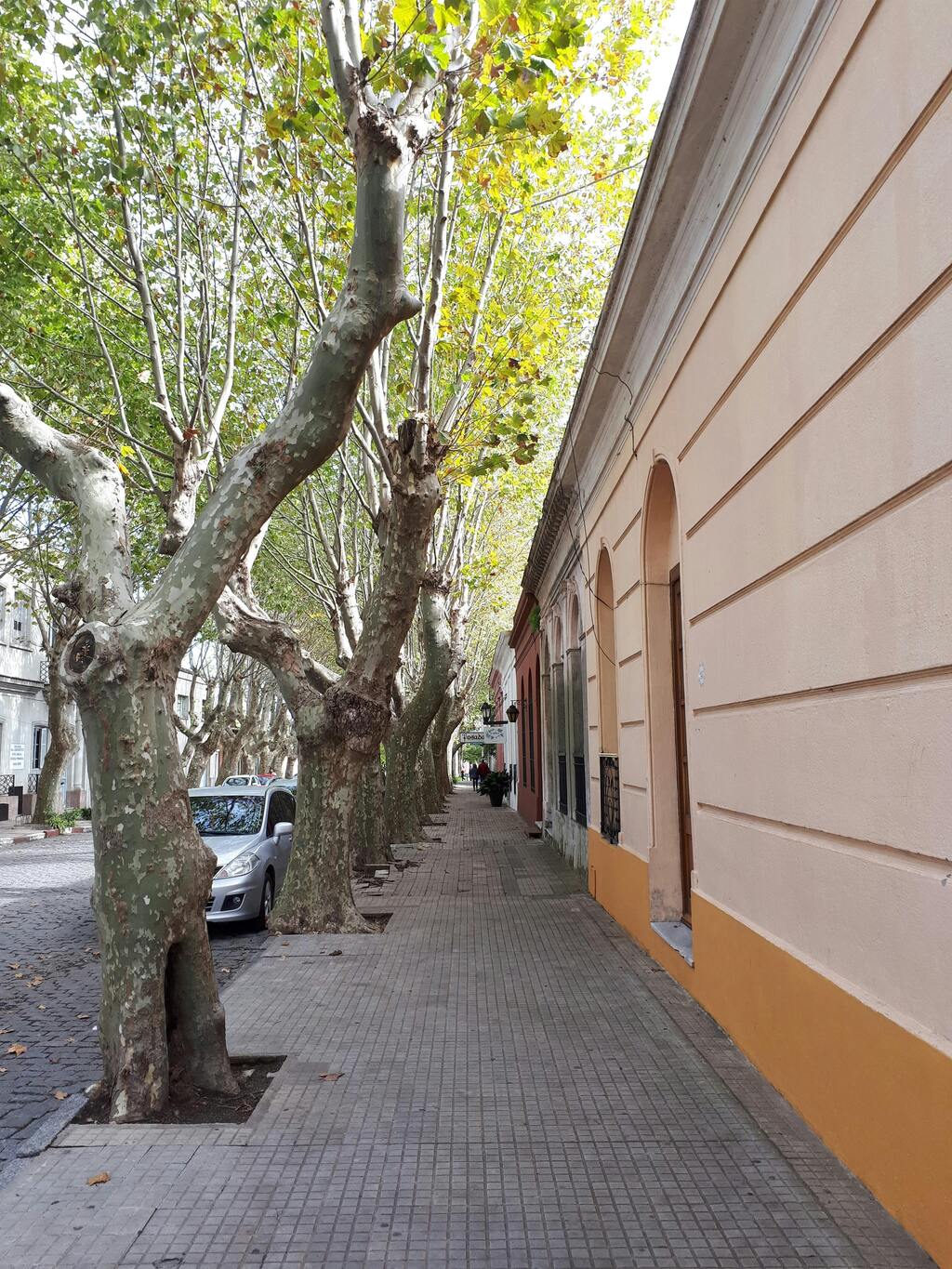
INCREASED ROOTING AREA
CU-Soil® can be compacted to 100% peak density—providing the structural strength necessary to support sidewalks, pavements, and other hardscape elements—while still maintaining interconnected void spaces that allow tree roots to penetrate and grow freely. This dual-function design gives trees access to a significantly larger rooting area than they would receive in traditional compacted soils, enabling roots to expand horizontally beneath paved surfaces rather than being forced upward, where they can cause heaving and damage.
With this increased rooting volume, trees are able to take up more water, oxygen, and nutrients, supporting healthier growth and longer life spans without compromising pavement stability. CU-Soil® effectively bridges the gap between urban infrastructure needs and the biological requirements of trees, creating a stable, load-bearing environment that promotes strong, sustainable root development.
RESEARCH-BACKED
CU-Soil® is supported by decades of peer-reviewed research, extensive field studies, and real-world performance data. Its development and validation have been documented in numerous academic publications, establishing it as one of the most thoroughly studied urban soil systems available. The research behind CU-Soil® encompasses laboratory testing, long-term tree growth evaluations, pavement performance studies, and full-scale urban installations—providing a robust scientific foundation for its effectiveness.
Cornell University continues to advance this work through ongoing research and refinement, further strengthening the knowledge base surrounding CU-Soil® and ensuring the system evolves with the latest advancements in urban forestry, soil science, and landscape engineering.
DECREASED TREE MORTALITY
Because CU-Soil® provides a larger, more accessible rooting volume beneath paved areas, tree roots are able to spread outward naturally, increasing their ability to absorb water, oxygen, and essential nutrients. This enhanced rooting environment supports stronger, healthier trees that are better equipped to withstand urban stresses such as heat, drought, and soil compaction.
As a result, trees grown in CU-Soil® exhibit substantially lower mortality rates compared to those installed using traditional planting methods. Multiple studies and long-term monitoring programs have demonstrated that trees established in CU-Soil® not only survive at higher rates but also develop fuller canopies, improved vigor, and significantly longer lifespans—offering lasting environmental and aesthetic benefits to urban spaces.
LEED CERTIFICATION FRIENDLY
Contact our office to learn how CU-Soil® can contribute to LEED certification on your project. Our team can provide guidance on applicable credits, documentation requirements, and best practices to help integrate CU-Soil® into a sustainable, high-performing site design.